
Menu
-
-
Home Automation
- Home Automation Controllers
- Lighting & Appliance Controls
- Home Automation Sensors
-
Ventilation, Temperature & Flood Controls
- Ecovent Ventilation Controls
- Keen Home Ventilation Controls
- La Crosse Weather Reporting System
- Sensaphone Temperature/Flood
- Winland Temperature/Flood Reporting
- Ezlo Water/Flood Detection
- WaterBug Water/Flood Detection
- WaterCop Water/Flood Detection
- Specialty Water/Flood Detection
- Temperature & Heat Sensors
- Smart Irrigation Controllers
- Smart Thermostats & Ventilation Controls
- Drapery & Blind Opener Systems
- Window Opener Systems
- Door & Gate Opener Systems
- Garage Remotes & Controllers
- Smart Door Locks
-
Security
-
Home Intercom Systems
-
Specials
-
Audio/Video
-
Independent Living
-
Structured Wiring
-
More...
-
Our Brands
- 2GIG
- A&D Medical
- ABB
- Adorne
- Advanced Dynamics
- Aeotec
- Alfred
- American Hunter
- Applied Digital (ADI)
- AprilAire
- Aria Audio Technology
- Arlington Industries
- Applied Digital (ADI)
- AprilAire
- BackBoxx™
- Bellman & Symfon
- BlueSpray
- Cabletronix
- Caregiver Smart Home Automation
- Chamberlain
- Chief Manufacturing
- Cool Components
- Dakota Alert
- Danalock
- DataComm
- Data-Tronix
- D+H
- Displine
- DoorBell Fon
- DynaQuip Controls - Watercop
- Ecovent
- Elk Products
- Enbrighten
- Evolve Technologies
- Ezlo
- FirstAlert
- Flipper
- Flic
- GE
- GoControl
- Go Simply Connect
- Greenfield Direct
- Hamilton CapTel
- Home Controls In-House Exclusives
- HomeSeer
- Honeywell Home
- ION Digital
- Inovonics Wireless
- Interstate Batteries
- Intrasonic Technology (IST)
- Jasco
- KBSound
- Keen Home
- Kwikset
- La Crosse Alerts
- Letzgo Products
- Leviton
- Linear
- Linxura
- Lithe Audio
- Luxul
- Mail Chime
- MedReady
- myTouchSmart
- Napco Security Systems
- NETIO
- Nice North America
- NuTone
- OEM Systems Co.
- Presence Speakers
- On-Q By Legrand
- Open Sesame
- Optex
- Platinum Tools
- Powerline Control Systems
- Qolsys
- Resideo
- Risco Group
- Russound
- RYSE
- STI
- Sanus
- Satco
- Seco-Larm
- Security Door Controls (SDC)
- Sensaphone
- Sensative
- Serene Innovations
- Shelly
- Simply Automated, Inc. (SAI)
- Skylink
- Somfy Systems
- Sonic Alert
- Speco Technologies
- Stelpro
- Street Smart Security
- Structured Cable Products (SCP)
- TekTone
- Tripp Lite
- Truth Hardware
- U-Tec
- UCS
- USP
- Vera
- Versa
- VMP - Video Mount Products
- VSSL
- WeBoost
- Winland Electronics
- X10
- Yale
- ZTECH
- Shop By Compatibility
- Home Essentials
- Central Vac
-
Our Brands
-
- Orders
- Profile
- 1-858-693-8887
- Login
-
United States (USD $)
Add description, images, menus and links to your mega menu
A column with no settings can be used as a spacer
Link to your collections, sales and even external links
Add up to five columns
Add description, images, menus and links to your mega menu
A column with no settings can be used as a spacer
Link to your collections, sales and even external links
Add up to five columns

Voice Control Compatibility with Home Automation
June 06, 2025 6 min read
Smart home automation devices add convenience to daily living through hands-free automated coordination between pairs or groups of devices. But automated routines can only activate based on preselected events, there is no room for on-demand adjustments or commands.
Smart devices with voice control compatibility take your smart home to the next level with on-demand, hands-free operation of your smart devices and your preprogrammed routines.
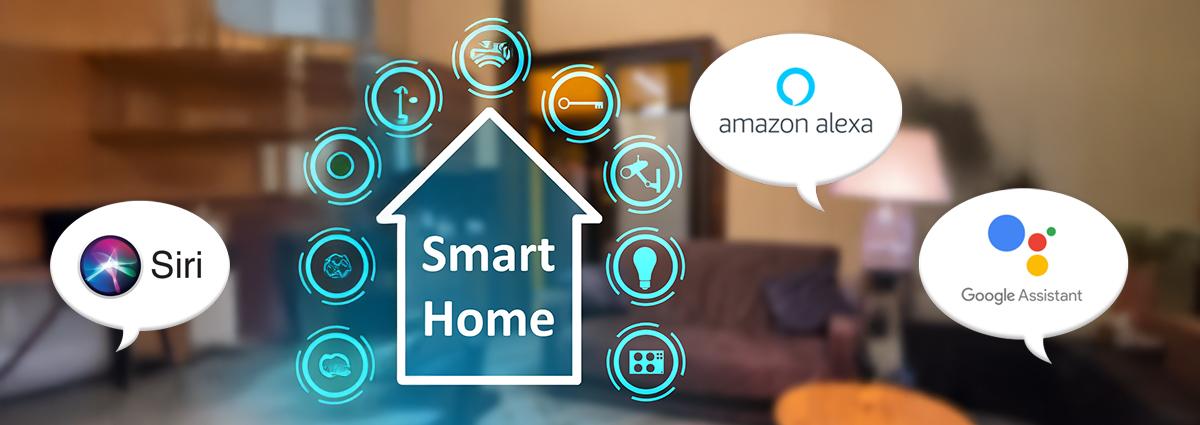
Forget about getting up or pulling out your smart device to manually control smart or mundane devices when it can be easily done using your voice. Voice assistants like Amazon Alexa, Google Assistant, and Apple Siri allow homeowners to easily manage their home automation network made up of smart devices via voice commands. To assist you in improving your smart home with voice compatible smart products, we've put together a Pros and Cons guide of each aforementioned voice assistant, including lists of various brands that offer compatible smart products that can be utilized with voice commands.
Amazon Alexa
Amazon Alexa is a cloud-based voice assistant designed to make your home smarter and your life easier. Built into Echo smart speakers, displays, and other Alexa-enabled devices, Alexa responds to simple voice commands to control smart home devices, play music, set timers, provide news updates, and more. With a wide range of compatible smart products, which include lighting, thermostats, locks, cameras, and appliances, Alexa can work as the main hub of your connected smart home. What separates Alexa from Google Assistant and Apple Siri is its wide compatibility with third-party devices and its library of Skills, which function like voice-activated apps. While Google Assistant can easily be integrated with Google services and is great at answering search-based questions, Alexa is optimized for smart device control and home automation. Through the HomeKit platform, Apple Siri focuses on user privacy and works seamlessly with Apple products, but it supports a more limited selection of smart home brands.
With simple voice commands to Alexa, you can turn individual devices or entire groups on or off, adjust your thermostat, brighten or dim smart lights, check the weather, stream music or audio, and even review your smart lock’s activity - without having to lift a finger. Users can create or delete scheduled or automated routines as needed. To enable wireless voice control, you’ll need an Alexa-enabled device like a smartphone or voice assistant, a compatible smart hub to coordinate automations and devices, and integration with your Amazon account.
Top brands including Aeotec, Yale, SmartThings, Leviton, FIBARO, Qolsys, and many others offer a wide range of Alexa-compatible smart home and smart security devices to expand the functionality of your smart home system.
Pros:
- Compatibility: Alexa is compatible with a wide range of smart home devices that make it a great choice for various smart home setups.
- Amazon Skill Ecosystem: With thousands of Skills, Alexa can perform a slew of tasks, from controlling devices to providing information and entertainment.
- Automation Scenes: Users can set up home automation scenes that trigger multiple actions with a single command to enhance automation.
Cons:
- Concerns with Privacy: Data privacy and how voice command data is used have always been an ongoing concern.
- Learning How to Use: Complex routines and integrating certain smart home devices can be a bit challenging at times.
- Internet Dependent: A stable Internet connection is needed for Amazon Alexa to function at its best.
To find smart devices compatible with Amazon Alexa, please check out our Amazon Alexa Compatible Devices page!
Google Assistant
Google Assistant is a voice-controlled assistant developed by Google and designed to easily integrate with your smart home to make everyday tasks simple. Built into Google Nest devices and available on Android smartphones and other compatible products, Google Assistant allows you to control smart lights, thermostats, locks, cameras, and other smart devices using voice commands. It really shines when integrated with Google services, such as Search, Calendar, Gmail, Maps, and YouTube; plus, it's fantastic for managing your schedule, getting directions, or finding information quickly. Compared to Amazon Alexa and Apple Siri, Google Assistant provides accurate responses to general questions and context-aware tasks. While Alexa supports a wide range of third-party smart home devices and offers a massive library of Skills, Google Assistant provides more access to Google’s information network. Apple Siri focuses on privacy and works best within Apple’s ecosystem, but it has a smaller (but growing) selection of compatible smart devices.
With Google Assistant you'll be able to turn on/off devices, activate home automation scenes, play audio and music, adjust your smart thermostat, dim or brighten smart lights, and even unlock the smart lock at your front door without having to get up from the sofa; plus, it's simple to create or remove automated or scheduled routines anytime you need. To use wireless voice control with Google Assistant, you'll need a compatible device like a smartphone or smart speaker, along with a smart hub that can handle multiple paired devices and scheduled automations.
Trusted brands like Nest, Yale, Leviton, SmartThings, Qolsys, FIBARO, Ezlo, and many more offer a wide range of Google Assistant compatible smart home and security products so that everyone at home can use their voice to enhance the functionality of their smart home.
Pros:
- Natural Language Capabilities: Google Assistant provides accurate voice recognition, support for multiple languages, and is highly effective at understanding natural language - this makes interactions better.
- Multi-User Recognition: You'll get personalized responses since Google Assistant can distinguish between the voices of different users.
- Customize Routines: Users can automate daily tasks by creating personalized routines that combine multiple actions that can be triggered by a single command.
Cons:
- Device Compatibility: Some devices may require additional setup or hubs to work with Google Assistant.
- Privacy Considerations: Like other voice assistants, users should be aware of data collection practices and manage security settings accordingly.
- Limit of Third-Party Skills: Unlike Amazon Alexa, Google Assistant has a smaller library of third-party integrations.
To find smart devices compatible with Amazon Alexa, please check out our Google Assistant Compatible Devices page!
Apple Siri
Apple Siri is a voice-controlled assistant designed to work within the Apple ecosystem to provide hands-free control of smart home devices, quick access to information, and an easier way to manage your tasks. Available on iPhone, iPad, Apple Watch, Mac, and HomePod smart speakers, Siri uses the Apple Home app and the HomeKit platform to manage a wide range of compatible smart devices, including lights, thermostats, locks, and cameras. Siri is usually the choice for users who prioritize privacy because it offers secure processing for many commands and end-to-end encryption when using HomeKit. Unlike Amazon Alexa and Google Assistant, Siri integrates with Apple’s hardware and services to provide excellent performance for users that are already committed to the Apple ecosystem. Even though Amazon Alexa supports the widest range of third-party smart devices and Google Assistant is known for how well it processes web-based search and context-aware commands, Siri focuses on ease of use, security, and automation through features like scenes and automations in the Home app.
With simple voice commands to Siri, you can turn individual smart devices or groups on or off, adjust indoor temperatures, check the weather, listen to your favorite music or online streaming audio, dim or brighten smart lights, and view access activity to connected smart locks - all of which can be done hands-free. You can also create or remove scheduled scenes and automation routines to fit your lifestyle. To enable voice control, all Siri-compatible devices must connect to an Apple device with Siri functionality, as well as to a smart hub capable of managing multiple paired devices and automations. Many of these devices also work with Apple HomeKit just as long as they communicate over Wi-Fi.
Manufacturers with innovative products such as Yale, 2GIG, Autoslide, Ezlo, Leviton, and others offer a wide selection of Siri-compatible products to not only enhance your smart home, but also enhance your home security setup.
Pros:
- Strong Privacy Focus: Apple user privacy is a priority with features like on-device processing and minimal data collection.
- HomeKit Integration: Easily works with Apple's HomeKit and provides a unified platform for smart home control.
- User-Friendly Interface: For iOS users, Siri offers a familiar and intuitive interface for managing smart devices.
Cons:
- Limited Device Compatibility: Compared to Alexa and Google Assistant, Siri's device compatibility is not as wide and primarily works with HomeKit-enabled products.
- Automation Challenges: While HomeKit supports automation, it may not be as versatile as routines offered by other platforms.
- Knowledge and Questions: Sometimes Siri's answers and information given after receiving a question can be less comprehensive than Alexa or Google Assistant.
To find smart devices compatible with Apple Siri, please check out our Apple Siri Compatible Devices page!
For more questions about how you can enhance your smart home using voice commands, or any other home automation or home security topics, talk to our team over the phone at (858)-693-8887 or email us at service@homecontrols.com. You can also check out other entries in our blog for more insights about smart home automation and security devices.
Leave a comment
Comments will be approved before showing up.
Subscribe
Sign up to get the latest on sales, new releases and more …